{{ r.glyph }}
{{ r.title }}
{{ r.body }}
The breath practice developed by Stanislav and Christina Grof, a held container in which the body's own intelligence brings forward what is ready to be met.
Grof® Breathwork uses accelerated breathing, evocative music, and a carefully held group container to access what Stanislav Grof called holotropic states of consciousness. The word means "moving toward wholeness." The practice is grounded in the idea that the psyche, given the right conditions, knows how to heal itself.
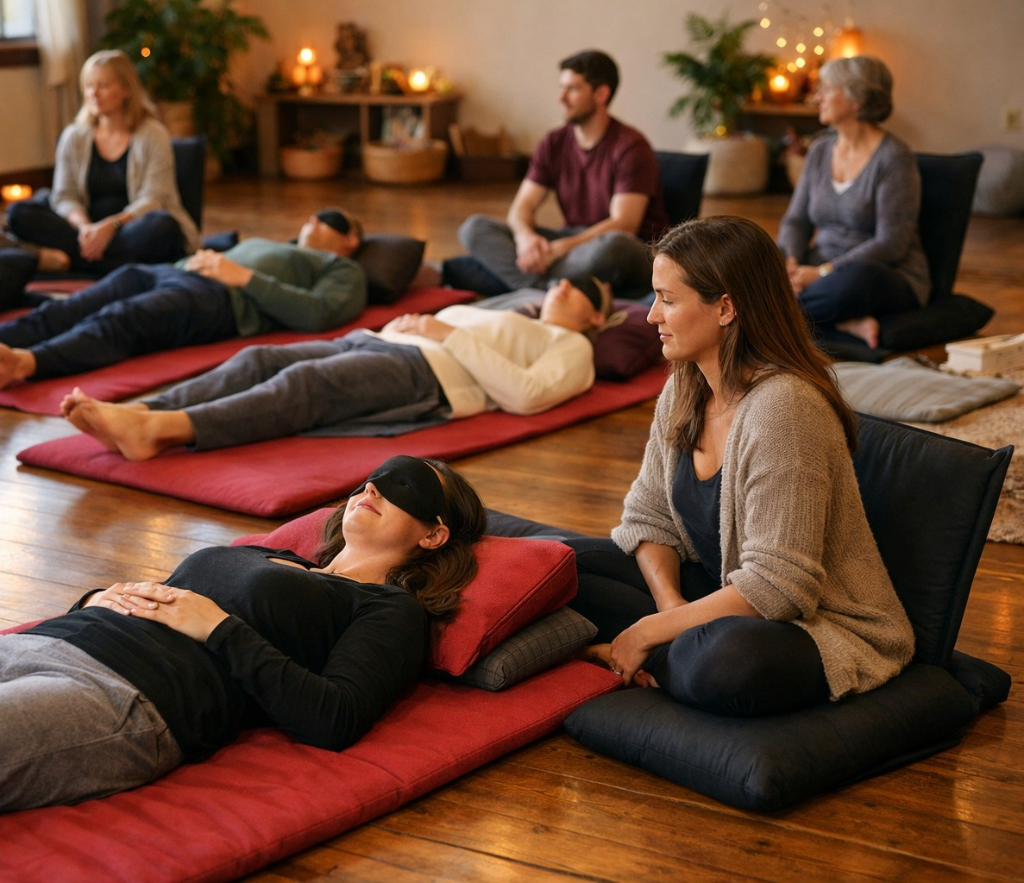
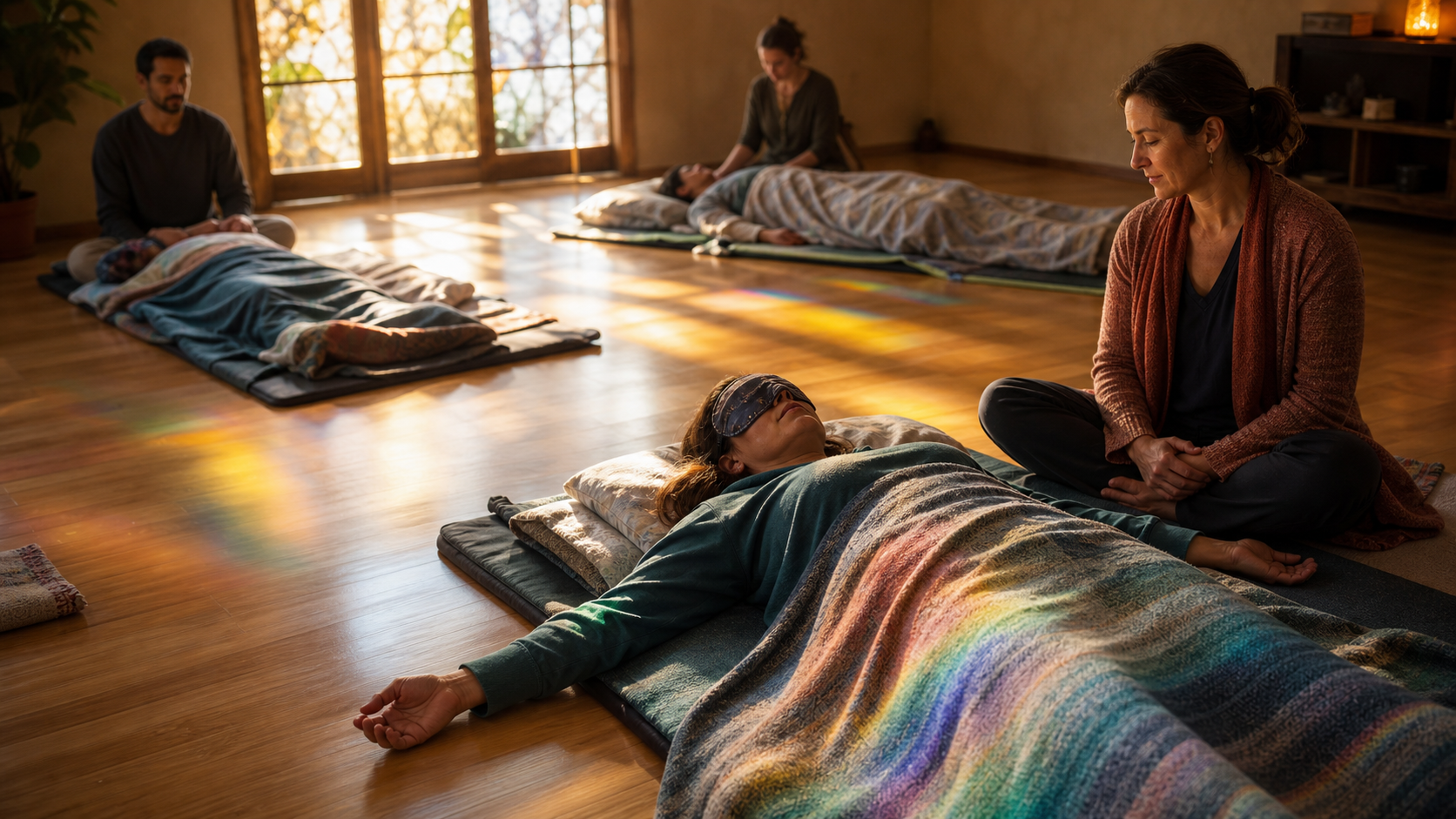
The body lies on a mat. The music begins. The breath deepens and quickens. What arrives is not predicted, prescribed, or steered. The breather meets what is ready to be met.
{{ r.body }}
The practice does not give the breather an experience. It gives the breather permission to have the experience already waiting inside them.
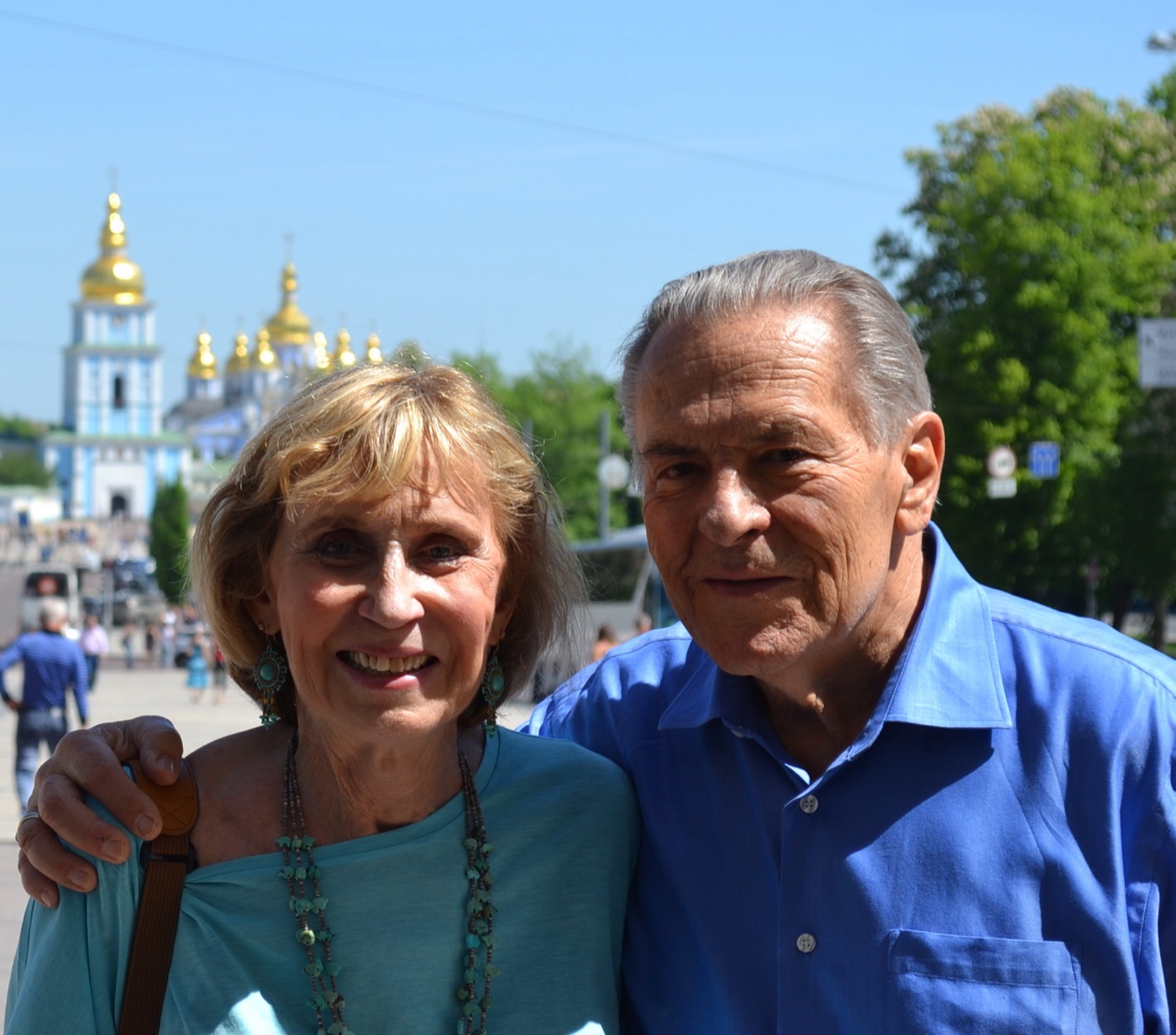
Stanislav Grof, M.D., Ph.D., trained as a psychiatrist in Prague and led pioneering clinical research in the 1950s–60s, coming to understand the psyche as far vaster than Western psychology had imagined.
With Christina Grof, founder of the Spiritual Emergence Network, he developed the breath practice as a complete, drug-free method, training generations of facilitators across six continents.
"The inner healer guides the experience. Our role is to trust it." After Stanislav Grof
Held over a long day or a weekend in a quiet, prepared space. Participants are paired: in each session, one person breathes while the other sits.
Then you switch roles. Sitting is itself profound work. Many describe the sitter role as where their deepest learning has happened.
People come to this work for as many reasons as there are people: working with grief, trauma, or stuck patterns ordinary therapy has not fully reached; preparing for or integrating other non-ordinary state experiences; drawn to it as a spiritual path. Some simply feel called, and trust that the calling is enough.
This work is profound and serious. Because of the depth of what can arise, it is not appropriate for everyone: pregnancy, recent surgery, severe cardiovascular disease, epilepsy, glaucoma, retinal detachment, certain psychiatric conditions, or active acute crisis are contraindications. Please be honest on the intake form so we can do this work safely, or help you find a better-suited path.
My own breathwork practice was where this path began, long before it became training. I facilitate from inside the territory, not above it, alongside ongoing study in Grof® Breathwork, the Tamura Method, and ministerial formation.
Circles are held with care, with discretion, and with the steadiness this depth of work asks for. What arrives in the room belongs to you.